
DG Developing Open Source AI Tool to Help with the Fight against Corruption
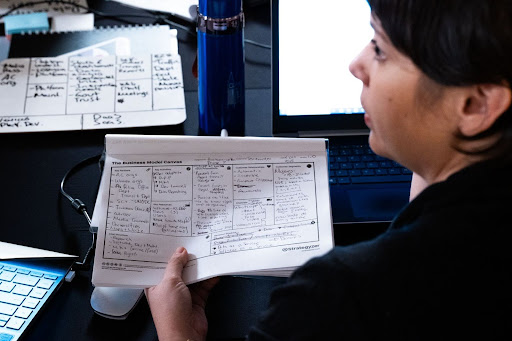
We’re excited to announce our forthcoming open-source AI tool to support anti-corruption work. The tool, which we hope to register as a Digital Public Good, will be used to extract text from complicated contracts and support anti-corruption efforts by increasing accessibility of and transparency around hard-to-access information.
Episode 4, Season 3 | Expanding into Climate Action: How Every Organization has a Role to Play
In episode 4, Season 3 of “Data…for What?!,” host Vanessa Goas and special guest Roshan Paul, Former Director of Leadership Practice & Climate Talent Initiative at IREX, discuss the Climate Talent Initiative, which is IREX’s first in-house climate program.
How Useful Is AI for Development? Three Key Lessons

The development world is buzzing with excitement over the idea that new and emerging applications of AI can supercharge economic growth, accelerate climate change mitigation, reduce inequalities, and more. But what does this look like in real life?
Episode 3, Season 3 | Context and Climate Action: A Conversation between the Local Development Research Institute and DG
In episode 3, Season 3 of “Data…for What?!,” DGer Charlene Migwe-Kagume and special guest Leonida (Leo) Mutuku discusses LDRI’s early warning system, an AI tool that is being used to enable farmers to plan and manage their harvest more effectively by using local and global data on weather patterns, crop yields, etc.
Episode 2, Season 3 | The Great Green Wall: How Data Can Advance One of Africa’s Most Ambitious Efforts to Combat Climate Change
In episode 2, Season 3 of “Data…for What?!,” host Vanessa Goas and special guests former DGer Joshua Mbai and Gilles Amadou Ouédraogo, Programme Management Officer for the Great Green Wall Accelerator at the United Nations Convention to Combat Desertification, discuss the Great Green Wall Initiative, the Great Green Wall Observatory, and how the the United Nations Convention to Combat Desertification and DG are committed supporting new and ongoing efforts aimed at combating climate change.
The Future of Technology Governance and Global Development: Why DG Brought DataReady In-house

DG is excited to announce we now have more robust data governance advisory services with the recent integration of DataReady.
Stakeholder, Where Art Thou?: Three Insights on Using Governance Structures to Foster Stakeholder Engagement
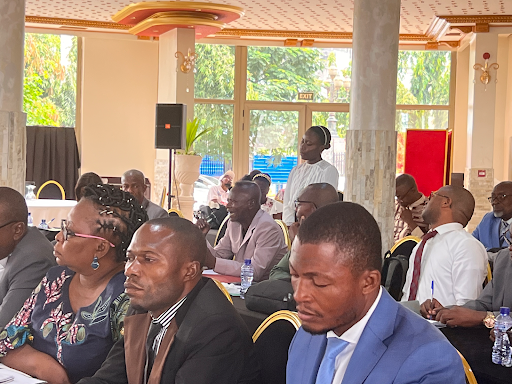
Through our Tobacco Control Data Initiative (TCDI) program and its sister program Data on Youth and Tobacco in Africa (DaYTA), we have learned that creating governance structures, such as advisory boards or steering committees, is one approach to ensuring that digital solutions appropriately meet stakeholders’ needs and foster future stakeholder engagement. In this blog, we explore three insights on how governance structures can advance buy-in with individual stakeholders while connecting them to one another.
Five Insights on Country-Led Digital Public Infrastructure Systems to Create a Cohesive Approach throughout Africa

Drawing from Development Gateway: An IREX Venture’s work in implementing country-specific digital solutions that support a cohesive approach across a given region or continent, we have identified five insights on how to go about implementing digital public infrastructure systems at the country-level while having a cohesive approach throughout Africa.
The Data Crisis Following USAID’s Withdrawal: Opportunities to Reimagine Data Systems

For decades, USAID and other US government funding supported global data systems, from health surveys and early warning tools to digital infrastructure for ministries. The abrupt termination of USAID funding has triggered twin crises: a halt to data collection and the undermining of digital systems – reveal existing inefficiencies and instabilities in how data is collected, managed, and shared both within and between countries.