AGRICULTURE

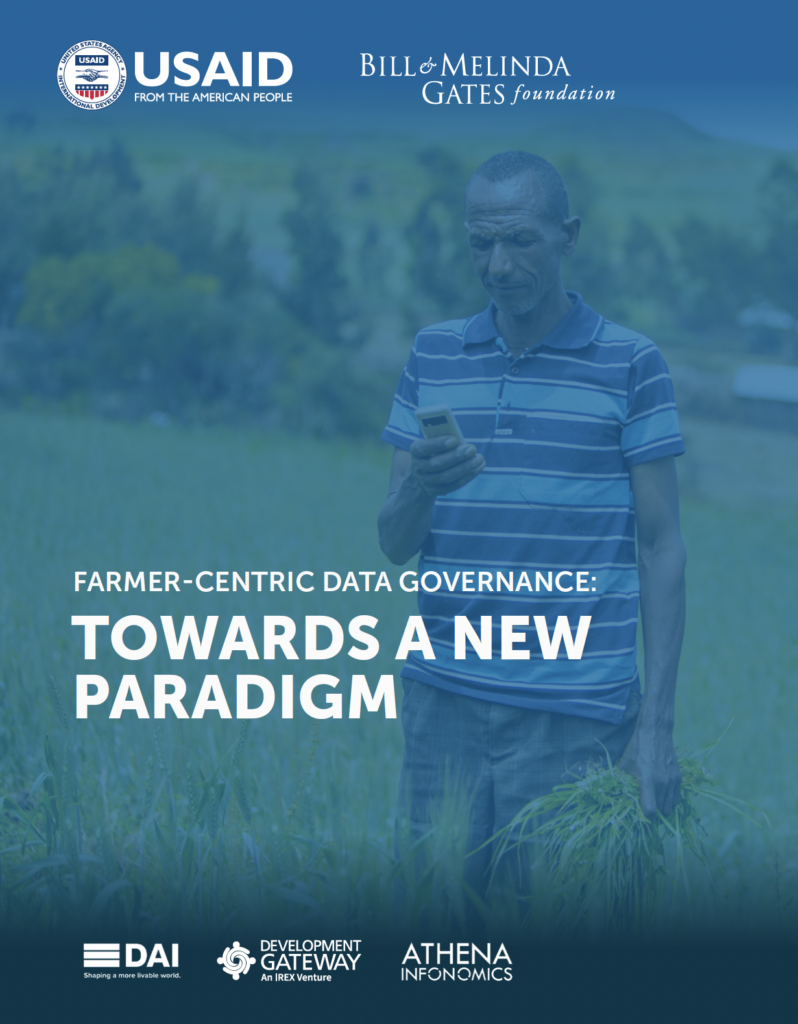
Farmer-Centric Data Governance

Towards a New Paradigm.

Why Farmers and Communities Should be at the Center of Data Initiatives

The potential benefits of digital agriculture are prolific. However, farm data is generally collected by others, and smallholder farmers rely on external resources, like weather data, and proprietary tools that provide specific advisories. Farmers face a paradox: while the use of data holds much potential, control over power, resources, and data governance challenges raise the possibility that farmers do not benefit from their own data. The current data economy is defined by a paradigm of extraction and a lack of consideration of equity, whereby the role of farmers and communities goes unrecognized. Digitalization may redirect power and profits away from farmers, unless agriculture stakeholders take deliberate steps to change this trajectory.

Given this breakneck forward momentum, implementing fair and equitable data governance models that prioritize farmer participation while guarding farmers against disadvantages and exploitation is crucial. Empowering farmers with more control over their data is critical to improve and protect their lives. There is an immediate need for practical tools and evidence to help governments, implementers, funders, and technology providers build more equitable agricultural data ecosystems.

our response

To support this shift, Development Gateway developed a suite of resources (A Report, six Deep Dives, and nine Case Studies) that provide user-centric approaches to data governance that place farmers and their communities at the center of data gathering initiatives and aim to reduce the negative effects of centralized power.

The findings are based on literature, interviews, and workshops to gather the experiences of change-makers and aim to:

  • Raise awareness around the current political economy of agricultural data and its implications;
  • Identify user-centric data governance models and mechanisms, particularly in Low- and Middle-Income Countries (LMICs);
  • Demonstrate the purpose, value, benefits, and challenges of these models for all stakeholders; and
  • Identify appropriate and relevant actionable principles, recommendations, and considerations related to user-centric data governance in the agriculture sector for the donor community.

This project was supported by the United States Agency for International Development (USAID), as well as support from the Gates Foundation. This guide was produced under DAI’s Digital Frontiers Project..

DASHBOARDS

TCDI South Africa Dashboard

TCDI Nigeria Dashboard

TCDI Zambia Dashboard

TCDI Ethiopia Dashboard

TCDI Kenya Dashboard

TCDI DRC Dashboard

Latest insights