
Farmer-Centric Data Governance: Towards A New Paradigm
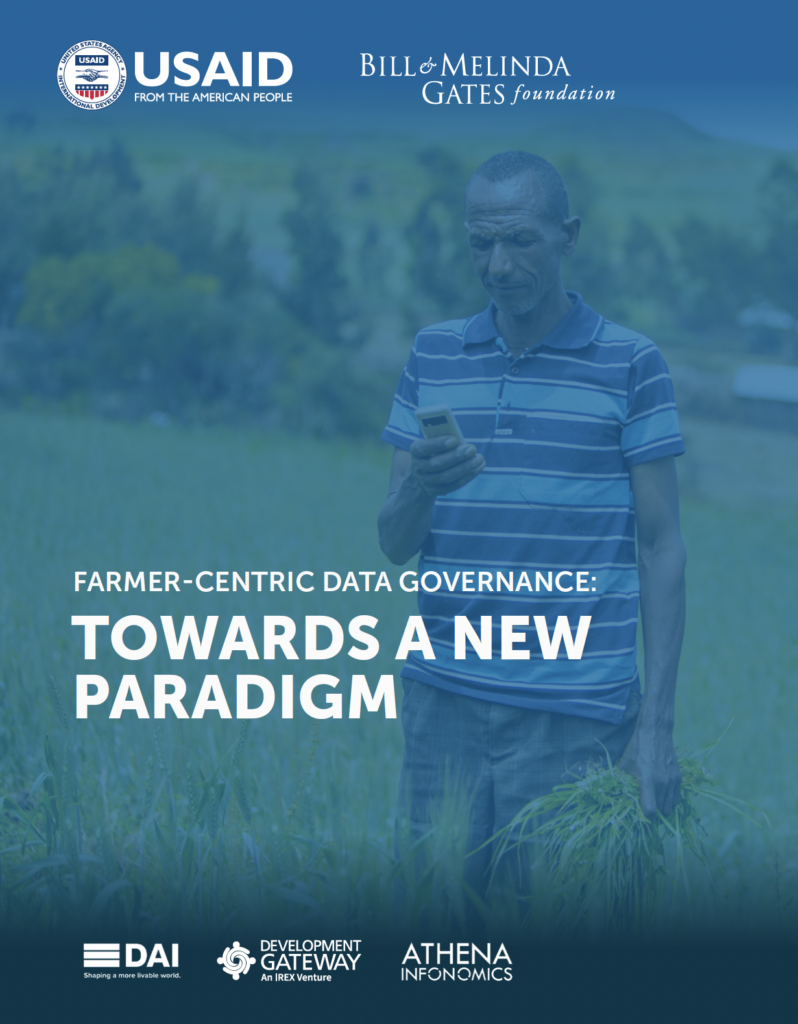
Background The potential benefits of digital agriculture are prolific. However, farm data is generally collected by others, and smallholder farmers rely on external resources, like weather data, and proprietary tools that provide specific advisories. Farmers face a paradox: while the use of data holds much potential, control over power, resources, and data governance challenges raise the possibility that farmers do not benefit from their own data. The current data economy is defined by a paradigm of extraction and a lack of consideration of equity, whereby the role of farmers and communities g
Farmer-Centric Data Governance Assessment: A New Paradigm For LMICs

Our objective in the DAI Farmer-Centric Data Governance Project is to demonstrate opportunities of emerging user-centric models and actions required to create an enabling environment of socio-technical factors needed for implementation.
DG at the African Green Revolution Forum (AGRF)
Representatives from Development Gateway: an IREX Venture (DG) will be attending the African Green Revolution Forum (AGRF) from September 5-9 in Kigali, Rwanda to highlight two projects: the Visualizing Insights on African Agriculture (VIFAA) project and the Farmer-Centric Data Governance Models project.
Farmer-Centric Data Governance Models: Protecting Farmers and Food Systems Today and Tomorrow
As farmers become more reliant on AgTech, they may find that the AgTech providers controlling these technologies (i.e., companies, nonprofits, and governments) are more integrated than ever before, resulting in a few organizations having unprecedented access to and control of farmers’ data. This dynamic results in positive and negative outcomes for farmers. Therefore, farmers face the paradox of using AgTech and adding value to their work, communities, and food systems while giving large amounts of data to AgTech companies that have, at best, limited plans for protecting farmers’ data. In this blog, we identified recommendations and next steps for AgTech providers on how to ensure that their technology benefits smallholder farmers.