
Evidence-Informed Policymaking: Education Data-Driven Decision Mapping in Kenya and Senegal
Between December 2022 and February 2024, Development Gateway: An IREX Venture (DG) and IREX, funded by the William & Flora Hewlett Foundation, conducted research in Kenya and Senegal to explore the complexities of education data supply, access, and decision-making processes. Effective decision-making in education relies on reliable, comparable, and accessible data managed through efficient information systems, facilitating resource optimization and goal monitoring. However, many countries, including Kenya and Senegal, experience challenges with unreliable education data, limited data utilization for decision-making, and insufficient national capacity to manage and leverage data effectively.
The research, employing DG’s Custom Assessment and Landscape Methodology (CALM), involved a desk review, stakeholder consultations, interviews, and validation workshops. Rather than an evaluation or comprehensive diagnostic, the study aimed to gather diverse perspectives and stories from stakeholders to contribute to ongoing discussions, technical investments, and reform efforts. We present key findings in Kenya and Senegal, before comparing and identifying shared characteristics that may be useful to assess in other country contexts.
Élaboration De Politiques Fondées Sur Des Données Probantes: Élaboration De Politiques Fondées Sur Des Données Probantes
Entre décembre 2022 et février 2024, Development Gateway : an IREX Venture (DG) et IREX, avec le financement de la Fondation William & Flora Hewlett, ont mené des recherches au Kenya et au Sénégal pour étudier la complexité des mécanismes de fourniture des données sur l’éducation, l’accès aux données et les processus de prise de décision. Une prise de décision efficace dans le domaine de l’éducation repose sur des données fiables, comparables et accessibles, gérées par des systèmes d’information tout aussi efficaces, facilitant ainsi l’optimisation des ressources et le suivi des objectifs. Cependant, de nombreux pays, dont le Kenya et le Sénégal, sont confrontés à des défis liés au manque de fiabilité des données sur l’éducation, à une utilisation limitée des données dans la prise de décision et à la faiblesse de la capacité nationale à gérer et à exploiter les données de manière efficace.
Cette étude, qui utilise la méthodologie CALM (Custom Assessment and Landscape Methodology) de DG, comprend un examen documentaire, des consultations avec les parties prenantes, des entretiens et des ateliers de validation. Plutôt que de réaliser une évaluation ou un diagnostic complet, l’étude visait à recueillir des points de vue et des récits diversifiés auprès des parties prenantes afin de contribuer aux discussions en cours, aux investissements techniques et aux réformes entreprises. Nous présentons les principaux résultats obtenus au Kenya et au Sénégal avant de comparer et d’identifier les caractéristiques communes qui pourraient s’avérer utiles d’évaluer dans d’autres contextes nationaux.
Announcing: Data-Driven Decision-Making Mapping in Education
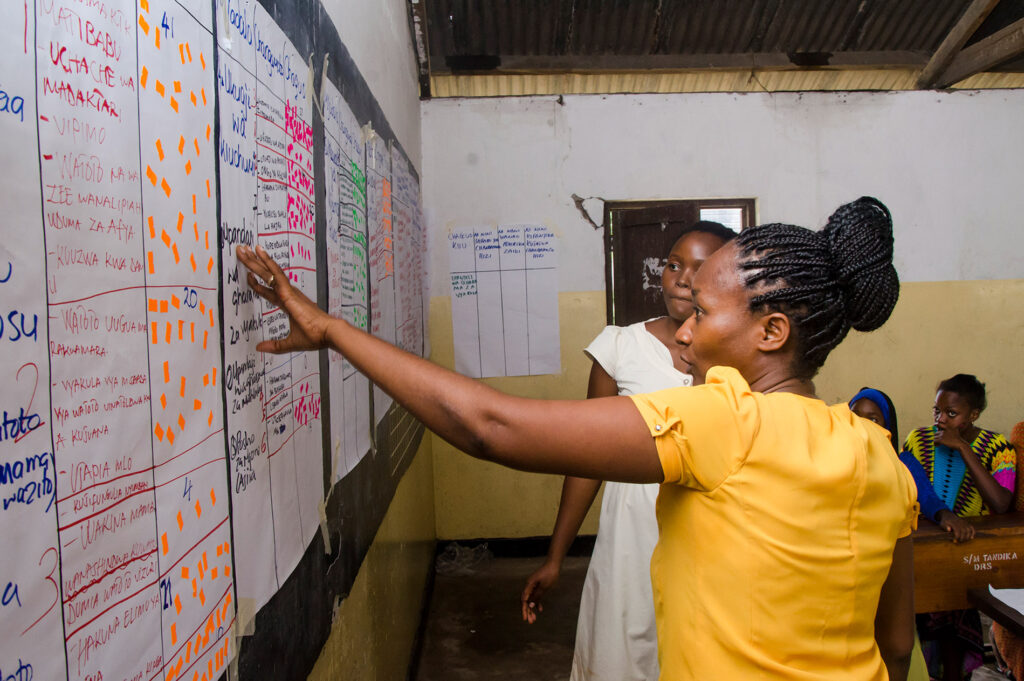
Development Gateway: an IREX Venture (DG) and IREX, in partnership with the Hewlett Foundation, are pleased to announce a new research program supporting data-driven decision-making in education in East and West Africa. This two-year, $300,000 project to map education data and decision ecosystems in Kenya and Senegal will focus on the variety of administrative, census, and survey data collected to implement and monitor primary and secondary education. The goal is to holistically understand the barriers to more effective data collection, sharing, interoperability, and use. By understanding the barriers, we can better design support for more robust education data ecosystems that drive better learning outcomes.
At a Glance | Evidence-Informed Policymaking: Education Data-Driven Decision Mapping in Kenya and Senegal

Development Gateway: An IREX Venture (DG) and our strategic partner IREX, supported by the William & Flora Hewlett Foundation, conducted a study of the education data systems in Kenya and Senegal. In our findings from this study, we underscore the necessity of a harmonized approach to education data management and share insights that provide a valuable roadmap for future reforms and investments in education data systems.
Shared Struggles, Shared Solutions: Education and Cross-Sector Data Use Insights
This blog draws on DG’s experience in climate, health, aid management, and agriculture to explore connections between the challenges of data collection, data hosting, and data governance across different sectors and what the solutions to overcoming them can teach us about strengthening education data systems.