
Advancing Tobacco Control in Nigeria: The TCDI Website
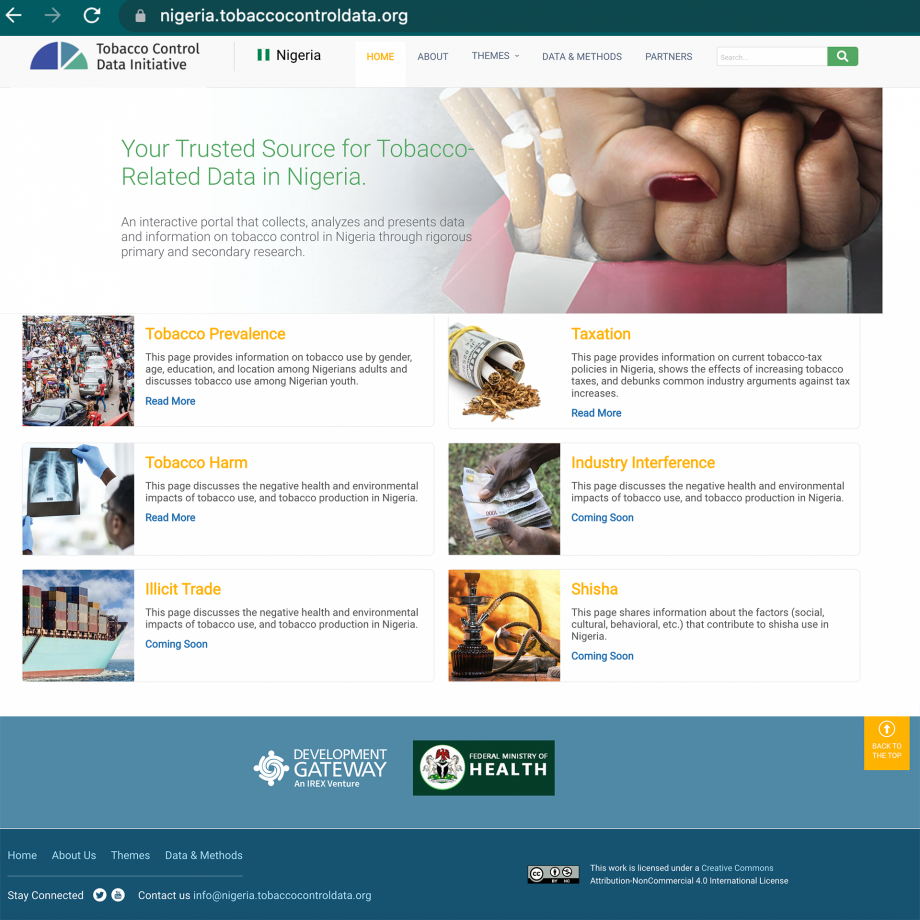
In June 2022, Development Gateway launched the Nigeria – Tobacco Control Data Initiative (TCDI) Dashboard. The TCDI website creates a “one-stop-shop” to access the relevant data that Nigeria’s policymakers need to advance tobacco control legislation and was created in response to the impending threat of increased tobacco use in Nigeria and the various dangers that accompany it.
Episode 3, Season 1 | Geography: Expanding & Deepening DG’s Regional Footprint
In Episode 3 of “Data… for What?!”, Development Gateway’s new podcast, we explore how we are prioritizing our geographical focus in the coming years. Conversations with Vanessa Baudin Sanchez, Carmen Cañas, and Charlene Migwe-Kagume highlighted the opportunities and challenges of expanding our portfolio in Central America and deepening our work and partnerships in West, East, and Southern Africa.
Price & Availability: the Impact of Russia’s Invasion of Ukraine on African Fertilizer Markets

In response to fertilizer availability challenges in sub-Saharan Africa which are fueled by the ongoing Russian invasion of Ukraine along with a host of pre-existing factors including COVID-19, VIFAA is now launching the Africa Fertilizer Watch to track regional and country-level market indicators, productivity and production distortions on food production and agriculture.
New Crisis Monitoring Tool Provides Insight into Sub-Saharan Africa’s Fertilizer Sector
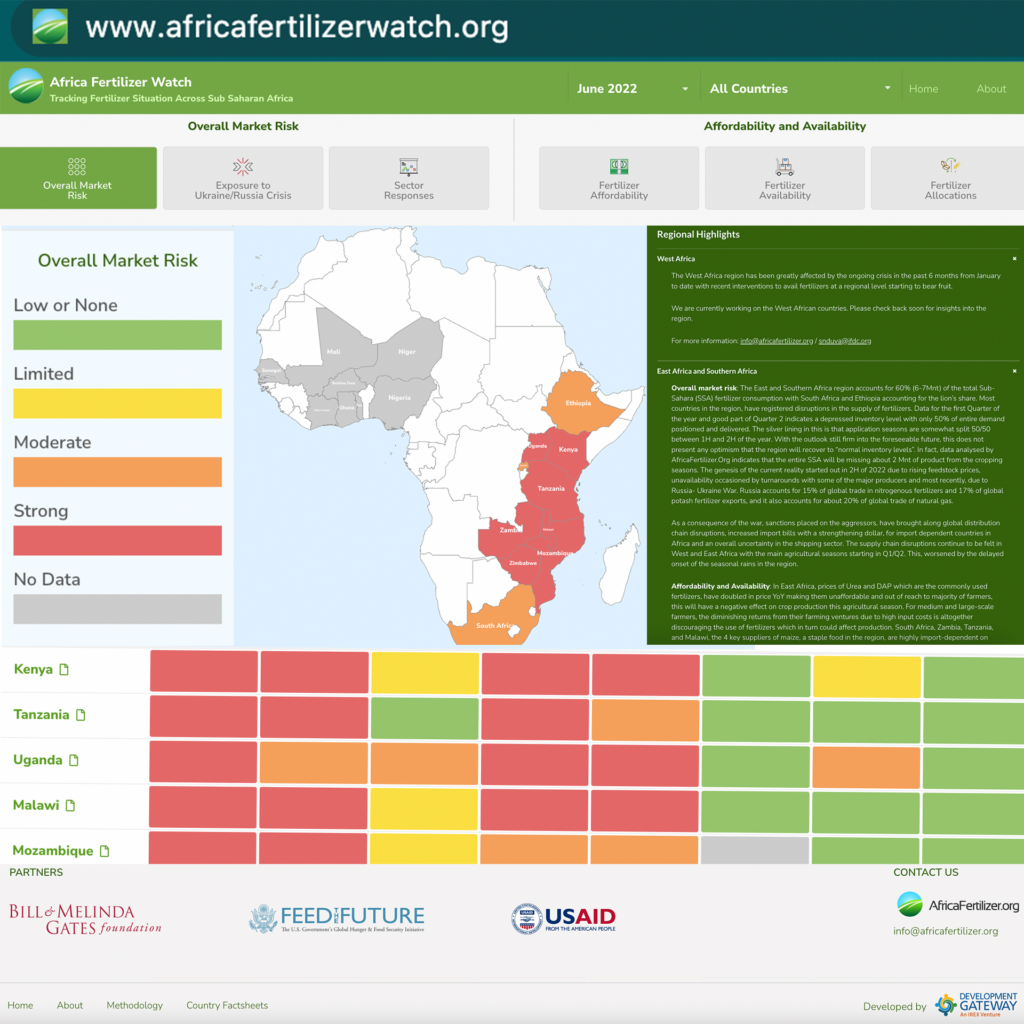
In an effort to minimize the effects of an imminent food crisis in Africa, Development Gateway and partners, Fertilizer Development Center and AfricaFertilizer.org, updated the Africa Fertilizer Watch Dashboard. The Dashboard tracks regional and country-specific impacts from elevated global fertilizer prices, limited supplier inventory, and decreased affordability at the farmer level, which includes data from ten countries in Eastern and Southern Africa.
The TCDI Nigeria Dashboard Launched by Nigeria’s Minister of State for Health
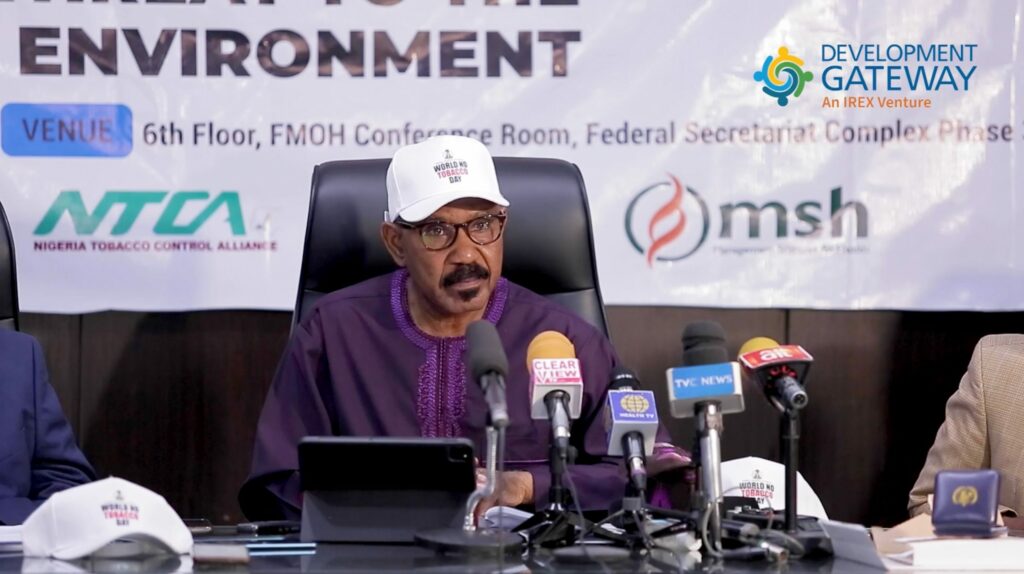
On June 28, 2022, the Tobacco Control Data Initiative (#TCDI) Nigeria Dashboard was launched by Nigeria’s Honorable Minister of State for Health Dr. Adeleke Olorunnimbe Mamora.
Since 2019, Development Gateway has collaborated with University of Cape Town’s Research Unit on the Economics of Excisable Products (REEP) to address barriers to data use in tobacco control by consolidating available and trusted tobacco control data, identifying and filling data gaps, and creating an online resource for policymakers to access the relevant data needed to pass and monitor tobacco control legislation. These findings have come together through TCDI, which is supported in partnership with the Bill & Melinda Gates Foundation and implemented in South Africa in addition to the Democratic Republic of the Congo, Ethiopia, Kenya, Nigeria, and Zambia.
DG at the African Green Revolution Forum (AGRF)
Representatives from Development Gateway: an IREX Venture (DG) will be attending the African Green Revolution Forum (AGRF) from September 5-9 in Kigali, Rwanda to highlight two projects: the Visualizing Insights on African Agriculture (VIFAA) project and the Farmer-Centric Data Governance Models project.
Episode 4, Season 1 | Digging Deeper in Agriculture
In this episode of “Data… for What?!” Josh talks to Charlene Migwe-Kagume about how we are approaching agriculture in our new strategy. DG has worked in Agriculture for a number of years, but how are we building on past experiences and our strengths to take this work forward? Josh and Charlene discuss digging deeper in agriculture and how innovation plays a role.
Nigeria’s Changing NPK Market (Part 2)

In their second blog exploring Nigeria’s changing fertilizer market, Vinisha Bhatia-Murdach and Scott Wallace dive deep into the details of the NPK fertilizer market and explore how Nigeria became a leader in this space. They also discuss why the VIFAA Nigeria dashboard is an important part of ensuring access to information at each point in fertilizer supply chain.
Improving Land and Crop Use Data in Nigeria – The VIFAA Innovation Fund
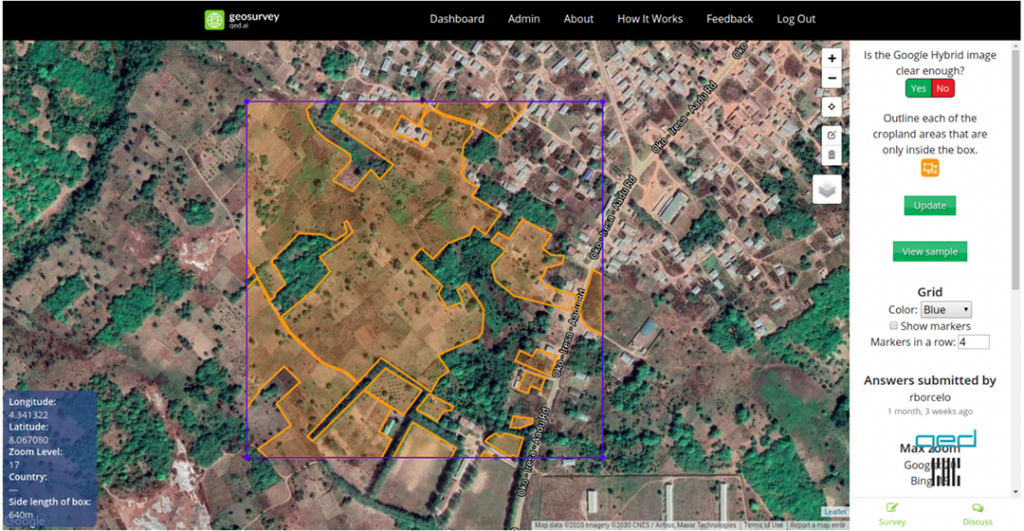
Our Visualizing Insights for Fertilizer in African Agriculture (VIFAA) Program launched an Innovation Fund to address data shortages relating to total crop production. Building on its track record of mapping land cover, Quantitative Engineering Design (QED) was selected to tackle the challenge of mapping Nigeria’s croplands. Through the Innovation Fund, DG and partners will use the resulting data and maps to answer two questions: (a) what is the total cropland under production in Nigeria and (b) what is the cropland under production by crop type.