
Open Contracting Explorer
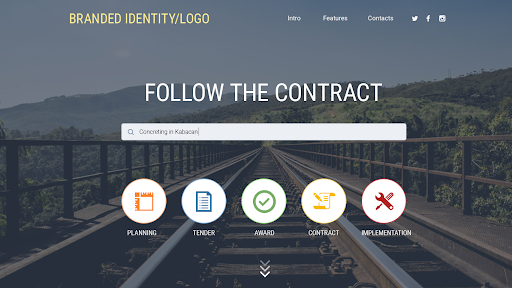
Government spending typically accounts for 10-20% of a country’s GDP – so citizens and governments share an interest in ensuring that these funds are used efficiently and effectively. Open contracting aims to publish procurement information in ways that are transparent and accessible. DG’s Open Contracting Explorer is our customizable, streamlined way to do just that – […]
Aid Flows Information System: Jordan

DG collaborated with UNDP to implement AMP, referred to in Jordan as the Aid Flows Information System (AFIS), for the Ministry of Planning and International Cooperation (MoPIC) of the Kingdom of Jordan. Overview of the Aid Management Platform (AMP) DG’s AMP is the global leader in aid information management systems (AIMS). It includes powerful tools […]
UNICEF Strategic Planning of Data for Children

Within the Agenda 2030 context of “leave no one behind,” there exists an opportunity – and a pressing obligation – to support better outcomes for children. Through a combination of desk research and key informant interviews, this work seeks to understand and address challenges and opportunities within national data and statistical systems, to support the […]
Open Contracting (OC) Hewlett: Enhanced Use of OC & Procurement Analytics

DG’s theory of change for this work is that the publication of OC data, combined with effective change management and implementation support – including co-created tools, training and resources, and facilitated engagement between government, citizens, and private sector – will result in the sustainable use of OC data for improved public procurement decision-making, We are […]
Understanding Government Data Use in Nepal
Development Gateway, in partnership with DFID Nepal, conducted a detailed study of government data use in Nepal. Drawing on the perspectives of 60+ government officials, donor staff, CSO operatives, and academics, we tried to paint a picture of the government data “ecosystem” in Nepal.
Avoiding Data Graveyards, Executive Summary
Executive Summary, written in partnership with the AidData Center for Development Policy
Avoiding Data Graveyards, Final Report
Avoiding Data Graveyards, Final Report written in partnership with the AidData Center for Development Policy
The Custom Assessment and Landscaping Methodology: Balancing Accountability and Learning in M&E Systems
Custom Assessment Landscaping Methodology (CALM): Balancing Accountability and Learning in M&E Systems shares one approach for developing tools and processes that increase the utility and impact of data for decision-making. It also shares case studies from our work with the UK’s Department for International Development (DFID) and the Government of Malawi to provide an overview of how implementing CALM supports the design of more balanced M&E data systems.
Understanding Data Use: Building M&E Systems that Empower Users
The August 2018 paper, Understanding Data Use: Building M&E Systems that Empower Users, emphasizes how critical it is for decision-makers to consider users’ decision space – from the institutional all the way to technical levels – in achieving data uptake